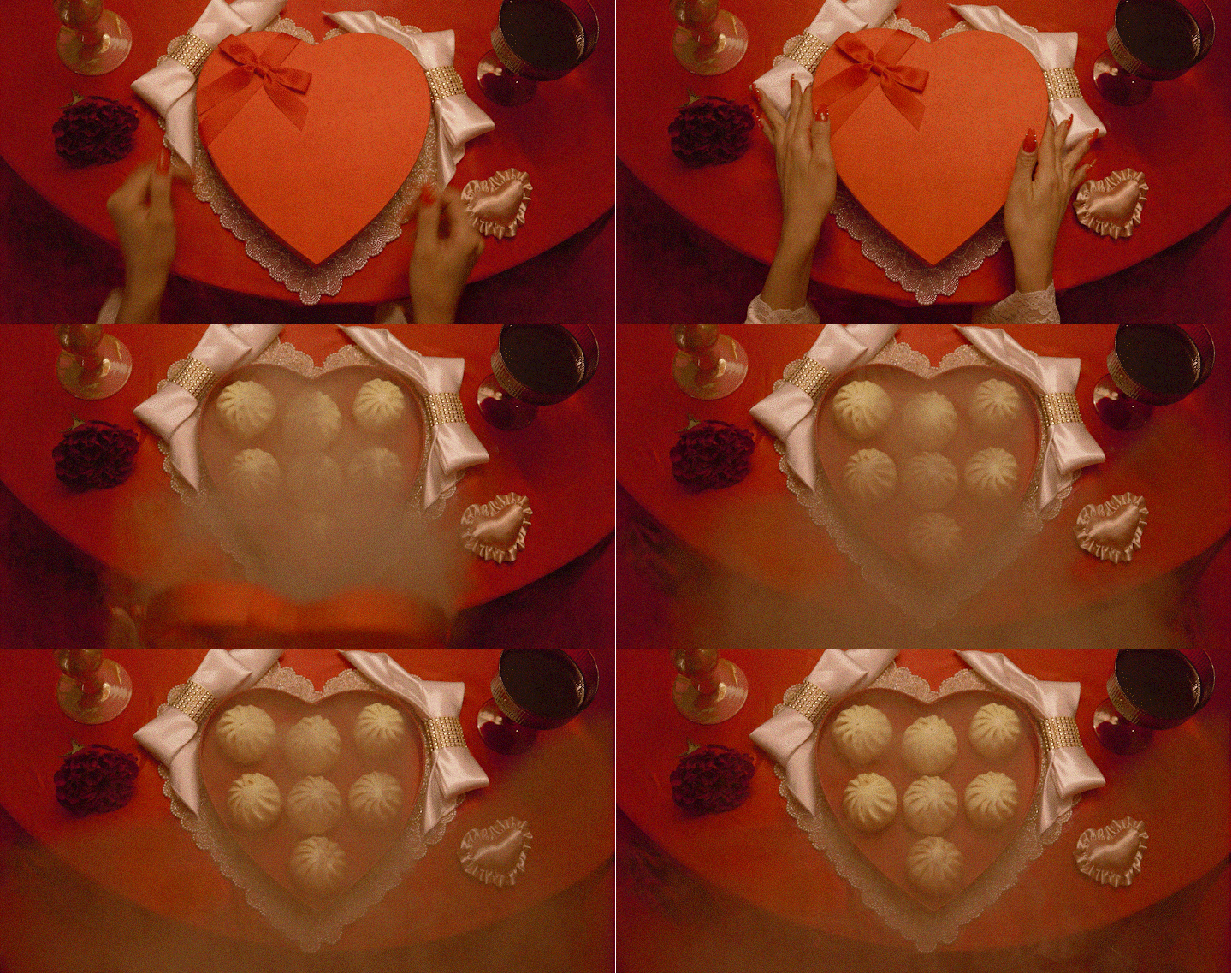
What began as a simple, cheeky visual of bao buns tucked inside a heart-shaped chocolate box quickly opened the door to a more layered conversation. The original spark for this short fashion film was playful and self-contained: a woman celebrating herself on Valentine’s Day, no partner required, indulging unapologetically in her favorite cuisine. At its core, the piece was about self-romance and autonomy — the quiet power of choosing pleasure on one’s own terms.
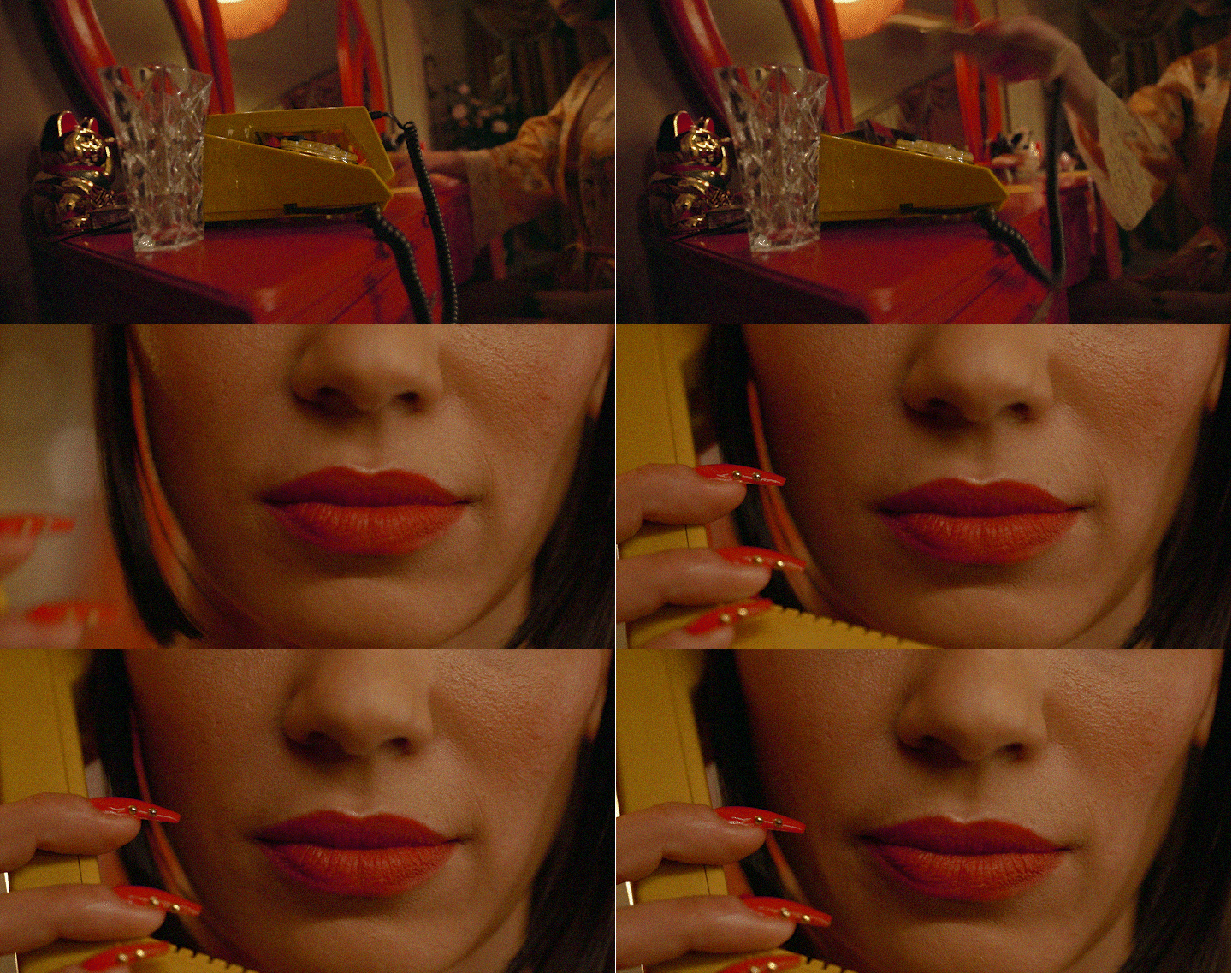
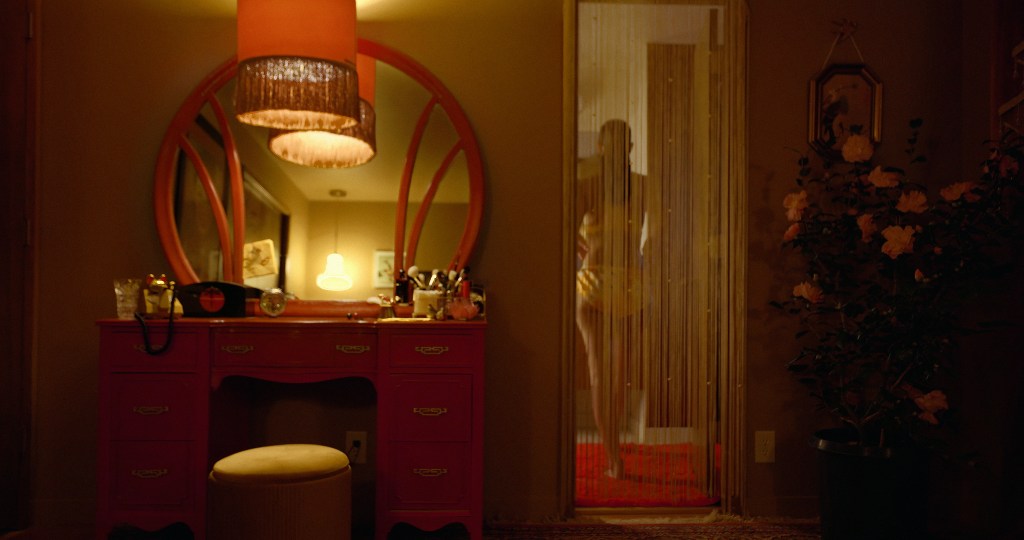
As the project evolved, so did the questions around it. Early styling and prop conversations pushed the concept beyond a straightforward self-love vignette into more complicated territory. The visual language — silk robes, red lacquer, takeout iconography, glossy food moments — began to surface a broader dialogue about women, sexuality, and the long history of cultural flattening that often accompanies both. What does it mean to borrow from another culture’s visual cues? When does appreciation blur into appropriation? And can we acknowledge that tension while still making something visually seductive and intentionally imperfect?
Food became the central metaphor. Western culture has long fetishized Chinese cuisine — the takeout box, the sensual noodle pull, the steam rising from dumplings — often stripping these foods of context and reshaping them to suit Western tastes. Even the title, Dim Sum Lights, is intentionally a little off: these are not specifically Dim Sum dishes, but borrows from the aesthetic (the lazy susan, the bao buns, the variety of dishes) in a playful but imperfect pun that mirrors the broader pattern of cultural repurposing. The fetishization of food often parallels the sexual fetishization of East Asian women, where both have historically been framed as exotic, submissive, and consumable.
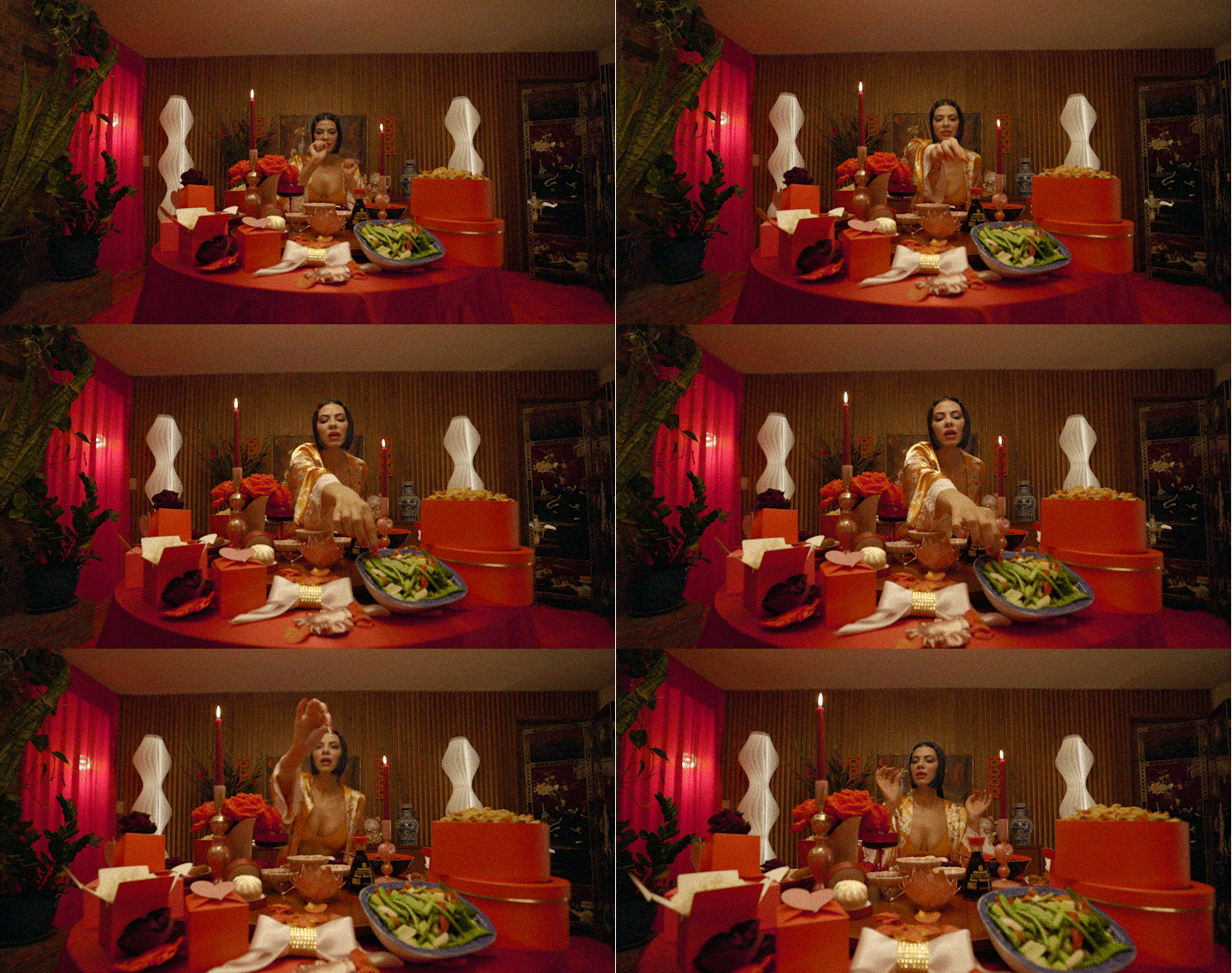
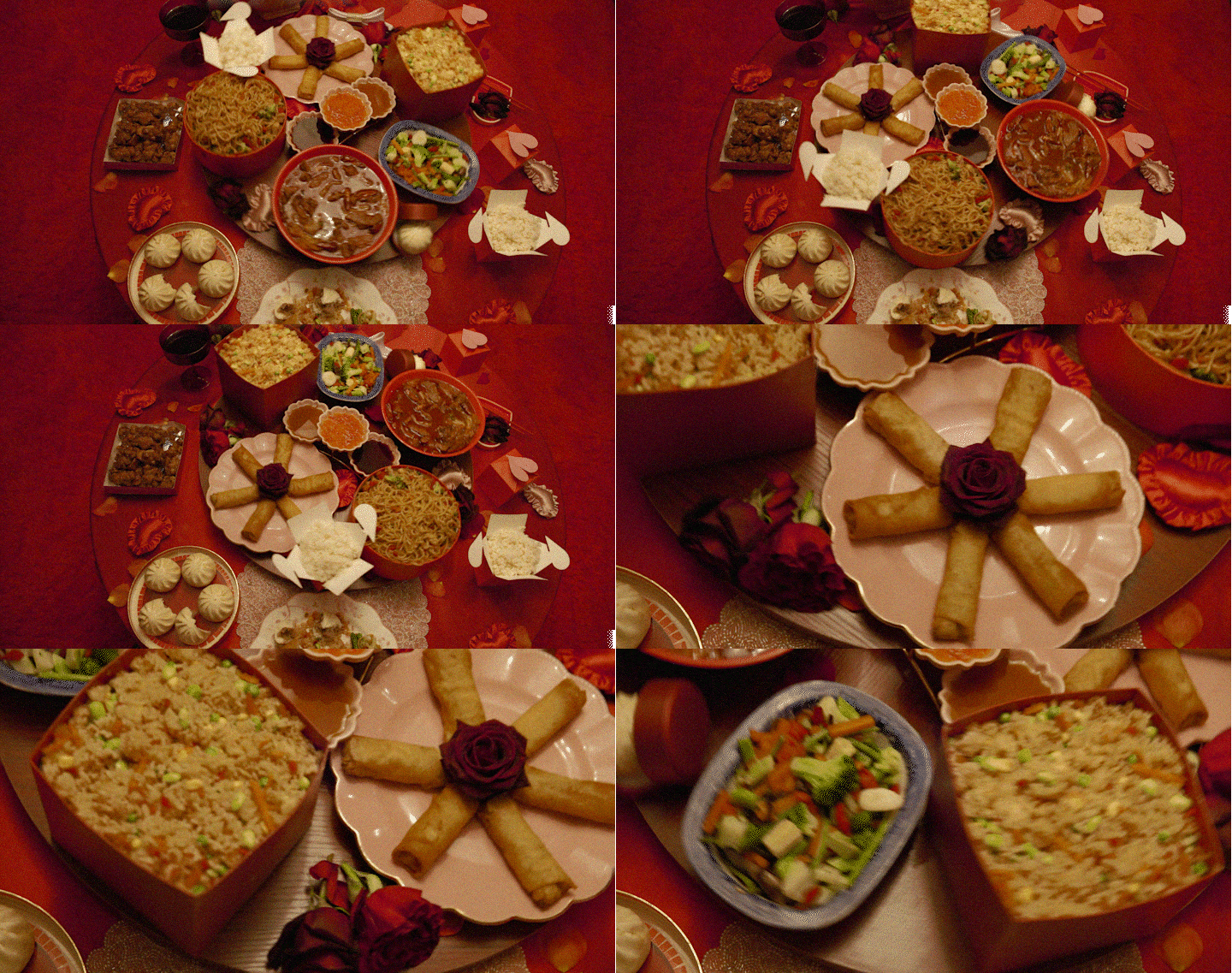
This film leans directly into that discomfort. The heightened sensuality, deliberate stylization, and slightly over-the-top romantic framing are meant to function as a tongue-in-cheek mirror. If the imagery feels a bit too lush or self-aware, that’s intentional. The work sits in the uneasy space where food fetish meets the historic fetishization of Asian women in Western media — dynamics deeply rooted in power imbalance. That awareness is precisely why it was important that our central character maintains full agency over her sexuality and pleasure. (For a thoughtful exploration from the perspective of Asian women, see Elyse Pham’s article: https://www.thecrimson.com/article/2023/2/16/fetishization-inquiry/.)
Casting added another layer of ambiguity. Depending on the viewer’s assumptions and visual context, the main character may be read as white, mixed-race, or even Asian. That fluidity complicates the framework in productive ways. If a viewer perceives her as Asian, does that make her participation feel more self-referential — or does it risk suggesting complicity in the Westernization of her own culture? If she is read as non-Asian, does the work tip more clearly into appropriation territory? The film intentionally does not resolve this tension. Instead, her ambiguous read underscores how much of fetishization operates through projection — how quickly viewers map identity, ownership, and permission onto a body based on surface cues.
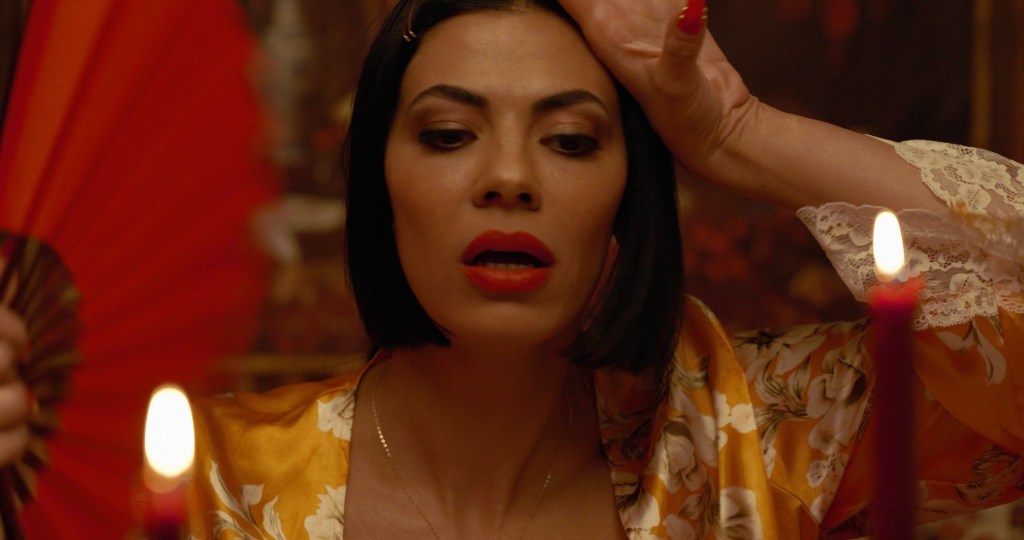
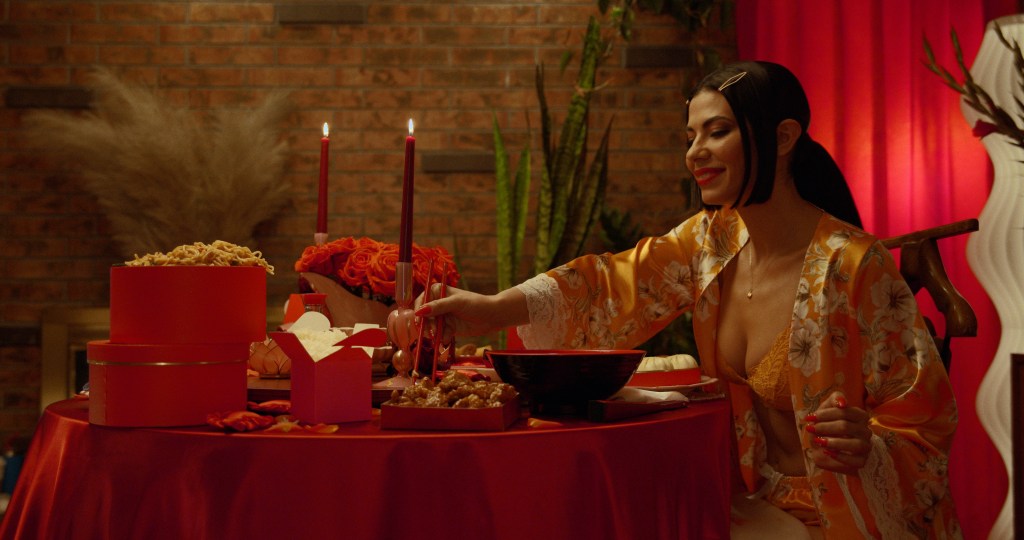
One of the most valuable parts of making this piece has been the learning process itself. Researching the history and nuances of Chinese and Chinese-American cuisine — including Yong Chen’s Chop Suey, USA: The Story of Chinese Food in America — and engaging with writing like “Hypervisible: The Aesthetics of Asian Food” (https://confluence.gallatin.nyu.edu/sections/creative-nonfiction/hypervisible-the-aesthetics-of-asian-food) deepened my understanding of just how layered this territory is. That awareness didn’t arrive all at once; it evolved through prop choices, set design, performance direction, and ultimately in the edit, as we calibrated the balance between humor, camp, and earnestness. In conversations with people of Chinese and Chinese-American heritage, reactions to the work have varied. Some viewers feel discomfort and see echoes of fetishization; others view it as harmless or clearly satirical. That range of responses has been instructive in itself.
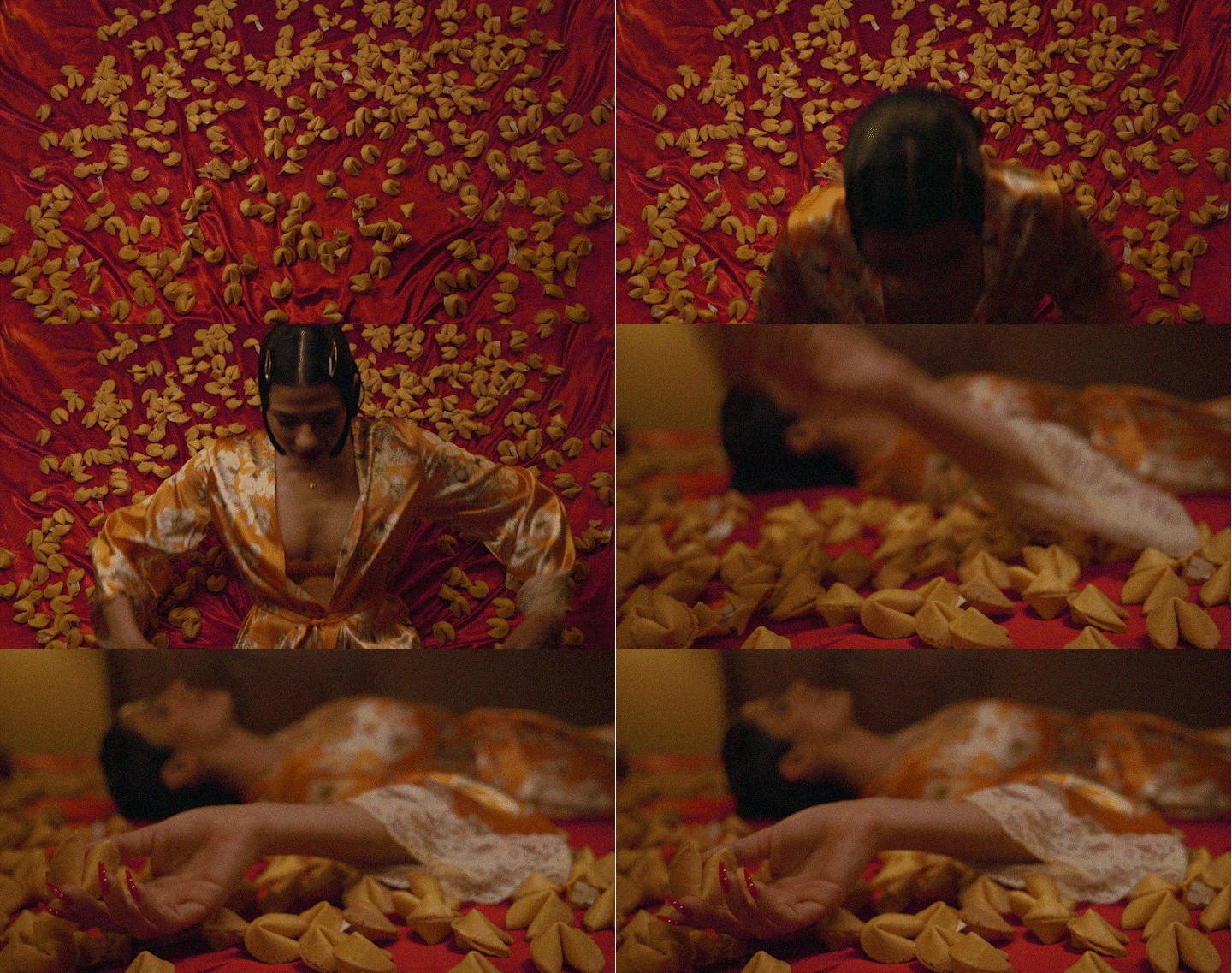
At the same time, the piece intentionally resists becoming purely critical or heavy-handed. There is real pleasure here — real appetite, real indulgence, real humor. The protagonist is not passive; she is fully in control of the fantasy she constructs. She is also messy and imperfect in her appreciation of the culture — and the film openly sits with the question of whether that imperfection is forgivable or complicit.
Ultimately, this project is less interested in offering clean answers than in holding space for contradiction. It asks whether we can look directly at the ways culture gets packaged, romanticized, and consumed — and still leave room for joy, agency, discomfort, and a little bit of mischief along the way.
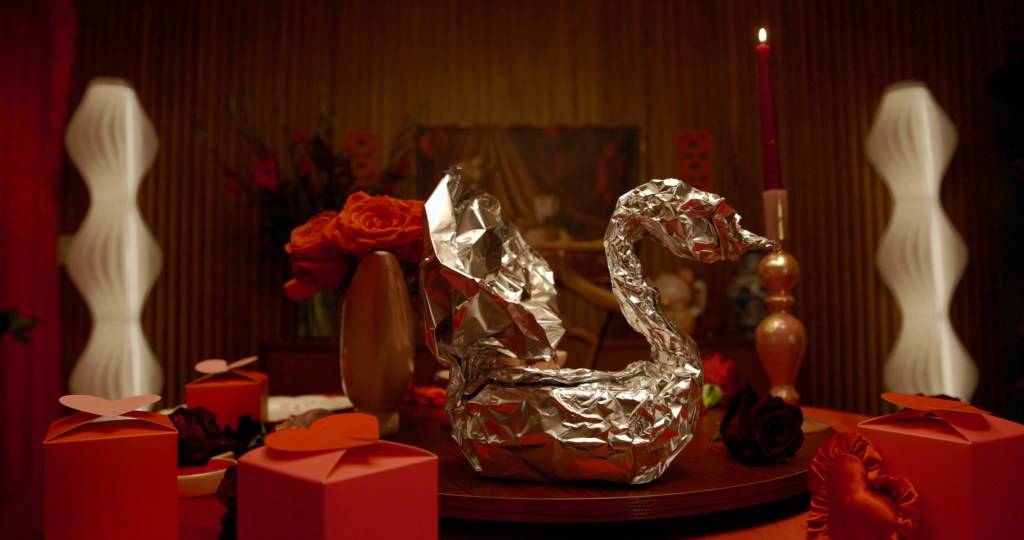
To view the video, click here:
 Art On The Precipice